
“If you get the woman, you get the family. If you can touch the woman and reach the woman, she will bring her family along.”
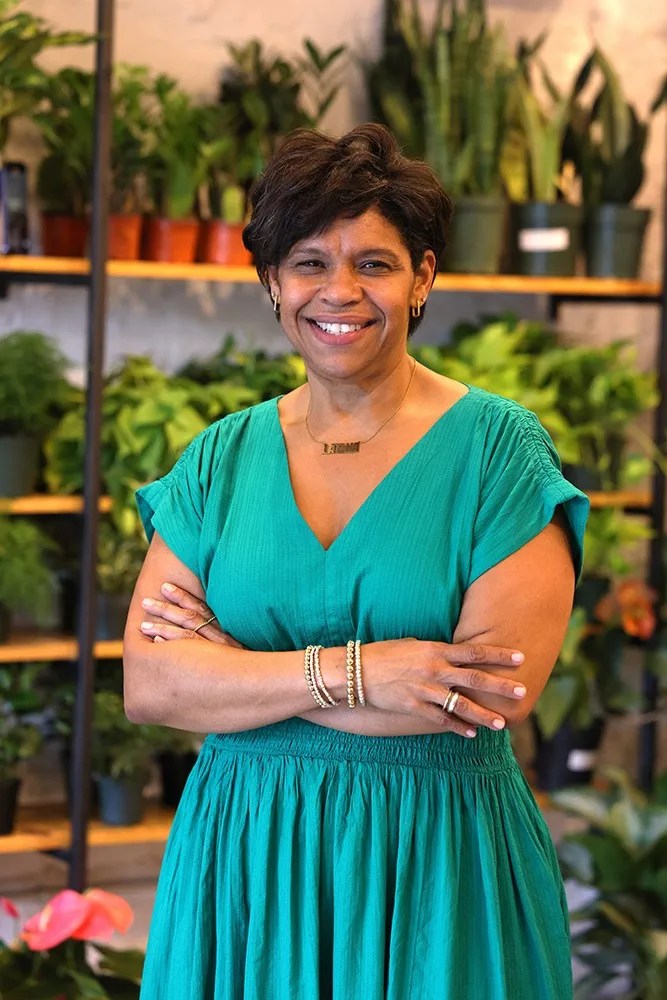
That’s how Charlotte Castillo, managing director of Poderistas, explained why the nonprofit organization invests in Latinas on a recent podcast, Behind the Work with Jessica Santana.
As a daughter of Dominican immigrants, culture wasn’t taught; it was lived and almost always had a soundtrack. Long before Charlotte discovered her purpose, she was a little girl in Brooklyn, falling asleep to the sounds of her uncles’ merengue band rehearsing in the next room. Music was her first love and the first vehicle she used to give her culture a platform.
As an undergraduate student at Wesleyan University, she launched El Ritmo Latino on her college radio station, introducing Latin music to a community largely unfamiliar with it.
“We would call record companies that represented Latin artists to get on their promotion list so we would have access to new music,” she said.
She continued her education, enrolling in a PhD program at New York University studying American Studies with a focus on Latin pop culture. But a semester and a half in, she called it quits. Not because it was too challenging or demanding, but because it wasn’t immersive enough.
“I didn’t want to be in the ivory tower studying how Latinos were impacting culture. I wanted to be part of it. In it. Making it. Weaving it. Doing the thing.”
Charlotte’s rise in media and entertainment
Her passion for music and Latin culture drove her out of the classroom and into a career with multiple record companies. But music was just the beginning. In 1996, Charlotte was hired by Christy Haubegger, founder of Latina Magazine, to join the launch team. She later became head of marketing for the magazine, the first print publication created for the bicultural Latina and a significant shift in Latin American media and entertainment.
“We felt we were building a community of Latina women around the country,” she said. “They would write us and say, ‘I love seeing ourselves and our cultura in the newsstands.’”
After eight incredible years building what felt like a family with Latina Magazine, Charlotte was ready to challenge herself and experience another angle of pop culture. She landed a role in television at ViacomCBS, now known as Paramount Global, one of the world’s largest entertainment companies.
Starting with Nickelodeon, she spent 15 years helping generate billions in revenue for some of the most popular brands in television, including SpongeBob SquarePants, Dora the Explorer, Paw Patrol, South Park and MTV. While she did what she could to integrate inclusivity into marketing and advertising campaigns that reached millions of children, she felt disconnected from the community.
Returning to Her Roots
In 2020, Charlotte was laid off from ViacomCBS, which she describes as “perfect timing,” as it was followed by a call that would reunite her with her purpose. Christy Haubegger, the same mentor who brought her to Latina Magazine, was launching what was expected to be a temporary effort to help Latinas step into their civic power and asked Charlotte to volunteer her marketing expertise.
“We were tired of waiting for people to save us,” said Charlotte. ”We wanted to advocate for ourselves.”
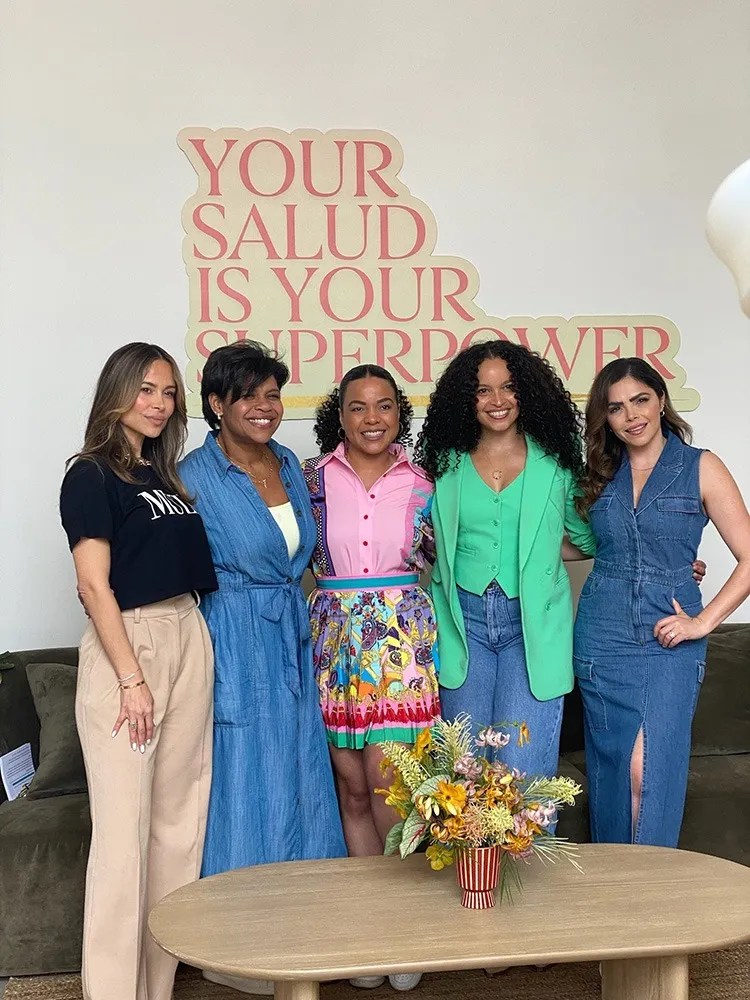
Poderistas was born at the height of a global pandemic and a tense election year by a coalition of 10 prominent Latina activists, executives and celebrities, including America Ferrera, Eva Longoria and Mónica Ramírez. The organization derived its name by combining “poder,” the Spanish word for power, with the suffix “ista,” which describes a person who embodies something. And that’s precisely what it means to be a Poderista: to own your power.
At the center of Poderistas’ mission is the Latina woman — the fastest-growing entrepreneur in the country, earning degrees at record rates, raising children, caring for parents and still being expected to show up for her community. Poderistas was built to pour into her and the generations she anchors.
“A lot of these women were called two weeks before the election to rally the vote, then were nowhere to be found afterward,” she said. “There wasn’t any real advocacy.”
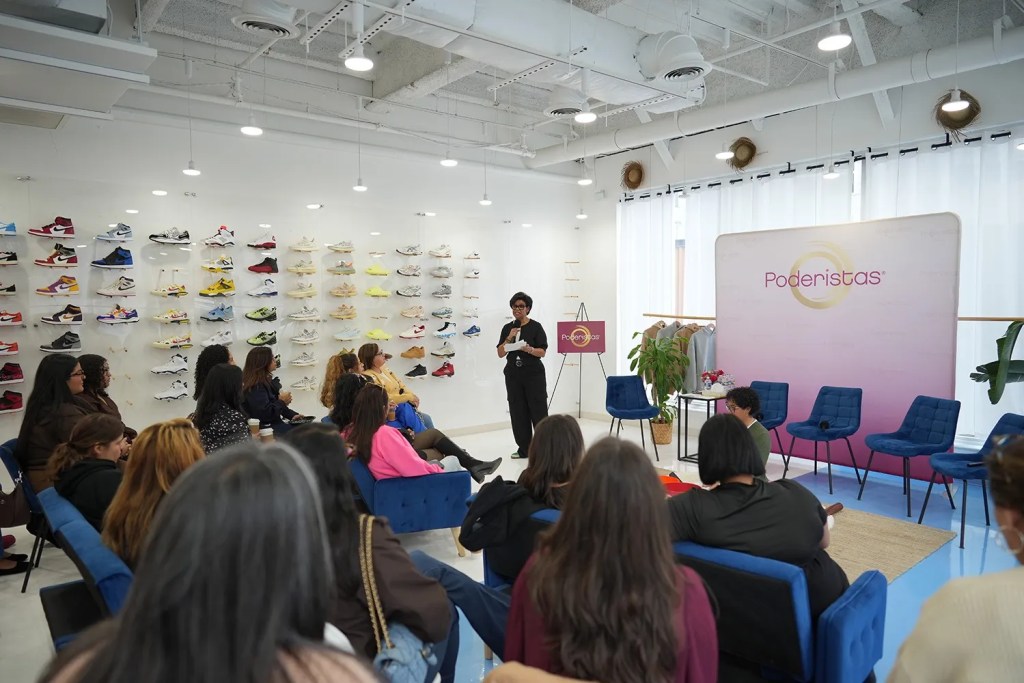
Charlotte, who now serves as managing director, has witnessed firsthand that for many Latinas, civic participation isn’t an apathy problem; it’s a trust problem. Does their vote really matter? Which sources of information can they truly rely on? Poderistas meets them where they are by infusing civic participation into “la cultura” through lifestyle and community.
“Beyond politics, we want Latinas to have a seat at every table,” she said. “We’re filling their cup and giving them accessible information, moments of joy, celebration and motivation.”
Poderistas is one of the fastest-growing digital communities created by and for Latinas, with approximately 400,000 members nationwide. Programs like Power Circles and the Poder Council bring together members and Latina changemakers to address local and national issues, while the Power Squad trains Latinas to become civic leaders in their communities. Members also gather at annual summits to attend masterclasses, panels and workshops on lifestyle topics, including parenting, finance and leadership development.
Charlotte describes the impact as intergenerational. Many of the Poderistas Latinas act as a bridge to a system their families couldn’t fully navigate due to language barriers — a reality that reflected her own experience. That knowledge can move in both directions: a Latina mother who is informed and civically engaged can guide her children, while daughters and younger generations can help their mothers, tias and other family members navigate systems that once felt out of reach.
For Charlotte, building Poderistas was a natural extension of everything she had always been a part of. “Looking back, I’ve always been a community and brand builder,” she said. “Brands and communities are interchangeable to me. I want people to experience us consistently through the way we make them feel.”
Charlotte didn’t map her way to this work; it came naturally, and that’s what informs her advice to younger folks. “If I could go back and tell my younger self something, I would say life and career and purpose are not linear; they evolve, and you figure it out.”
“For me, personally, it goes full circle,” she said. “My journey started with helping Latinas feel seen in music and lifestyle.”
That little girl who would fall asleep to the beat of merengue never imagined she’d grow billion-dollar brands or lead a national movement. But of all her accomplishments, Charlotte is most proud of the communities she’s helped build and call home.
To learn more about Poderistas and its programs, and to support their mission to empower Latina women and families, visit poderistas.com.
What does racial healing look like in New Mexico, a place shaped by centuries of Indigenous, Hispanic, Mexican and Anglo histories?
In this episode of Pass the Sopapillas, host Manuel González brings together cultural leaders, educators and advocates Michelle Otero, Casey Douma, Dulcinea Lara and Loretta Trujillo for an honest conversation about healing, identity and community. Through personal stories, the guests reflect on the lasting impacts of colonization, inherited trauma and systemic inequities while exploring what it means to build relationships across differences.
Michelle Otero discusses the power of storytelling and vulnerability, while Casey Douma shares how Native communities navigate identity, belonging and connection beyond reservation boundaries. Together, they examine the role of truth-telling, accountability and intentional relationship-building in creating pathways toward healing.
In the second half of the episode, Dulcinea Lara and Loretta Trujillo focus on education as a vehicle for transformation. They explore how culturally responsive teaching, language preservation and community-centered learning can empower young people and challenge systems that have historically marginalized Indigenous and Hispanic communities. Drawing on the landmark Yazzie-Martinez education lawsuit, they discuss what it means to redefine success for future generations.
Throughout the conversation, one theme remains constant: healing begins when people are willing to listen, share stories and recognize one another’s humanity. This episode offers a powerful reflection on the future of New Mexico and the work required to build a more equitable and connected society.
When communities across the United States marked the 10th annual National Day of Racial Healing, many gathered in familiar public spaces where connection happens naturally, such as libraries, parks and neighborhood recreation centers.
For the first time, events like these took place in all 50 states and the District of Columbia, a milestone reached by communities nationwide, and strengthened through partnerships with two organizations rooted in everyday community life: the American Library Association (ALA) and the National Recreation and Park Association (NRPA).
In libraries and parks across the country, celebrations of racial healing began not with sweeping gestures, but with the simple decision to gather.
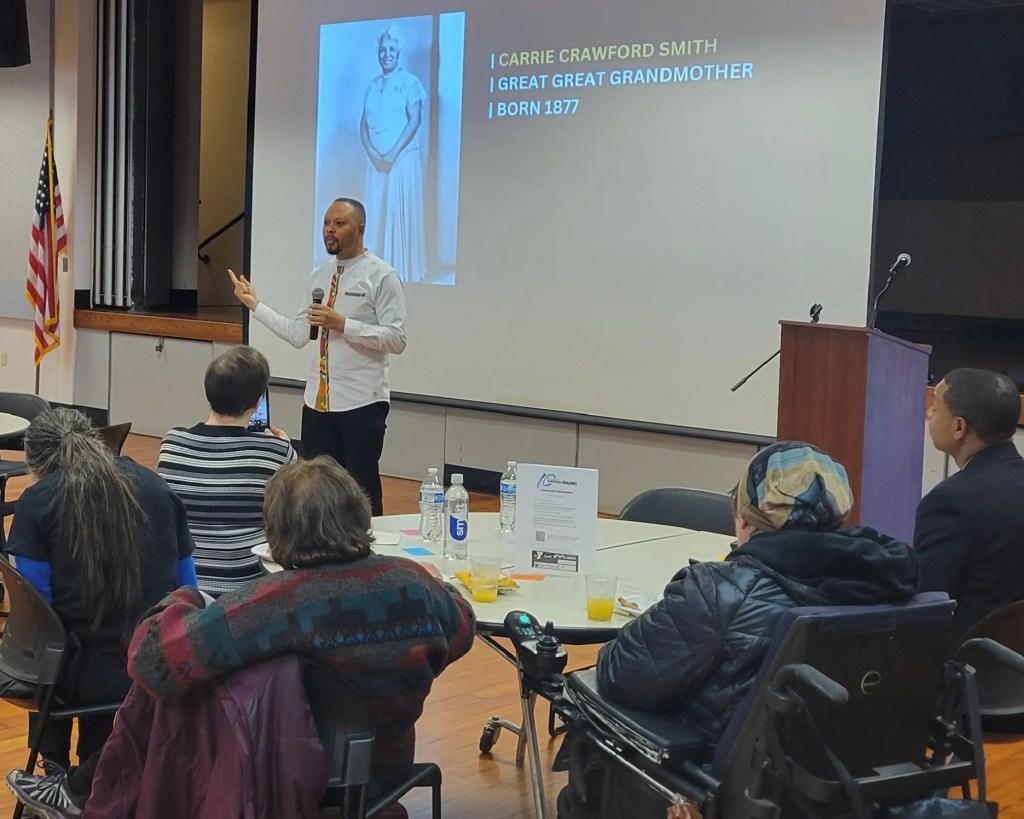
(Photo Credit: City of Olympia Parks, Arts & Recreation)
In parks, healing happened in public
“Parks are places that everyone goes to,” said Autumn Saxton-Ross, chief equity and education officer at the National Recreation and Park Association. “It’s an infrastructure that is necessary for a functioning and healthy society.”
Through NRPA’s national network of more than 68,000 members, Saxton-Ross helped coordinate participation across park systems nationwide, encouraging agencies to shape gatherings around what made sense in their own communities.
In Washington state, one parks department set aside a full day to bring staff and community partners into the same room to explore what real, authentic relationship-building looks like in practice. Another small agency used the day as an opportunity for staff development, introducing the StrengthsFinder tool as a way to open up conversations about teamwork, trust and what it means to recognize and appreciate one another’s contributions.
That kind of internal grounding matters, Saxton-Ross noted, because community healing often begins with the relationships inside the institutions that create community space.
In Montana, Missouri, South Dakota and other places, local agencies organized some of their state’s first National Day of Racial Healing events, including cultural celebrations, community gatherings and moments of shared reflection.
“The foundation of all of it is connection,” Saxton-Ross said. “It was healing for so many communities to be able to explore that unhindered.”
In libraries, belonging began with stories
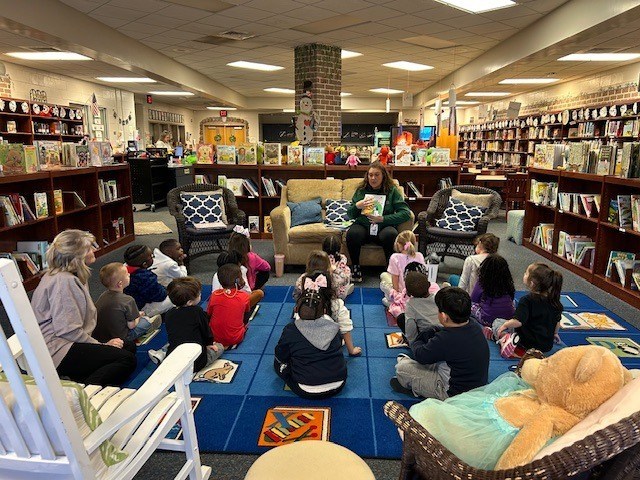
Libraries offered a different kind of gathering place, but an equally civic one.
At the American Library Association, Kevin Strowder, director of the Office for Diversity, Literacy and Outreach Services, said the decision to bring National Day of Racial Healing activities into libraries across the country grew naturally out of the association’s core values.
“Racial healing, working across differences, connection, all of those things are at the forefront of our profession,” Strowder said. For years, he noted, many of the conversations about these topics were happening within the library field, among members. This year marked a turning point: an opportunity to take the next step and give librarians across the nation practical tools to carry those conversations into their communities and make them matter locally.
Rather than prescribing a single format, ALA encouraged local creativity, allowing schools and local librarians, Strowder said, to “run wild and brainstorm bigger” around what healing and belonging could look like in their own settings.
(Photo credit: Oakland Middle School/ALA)
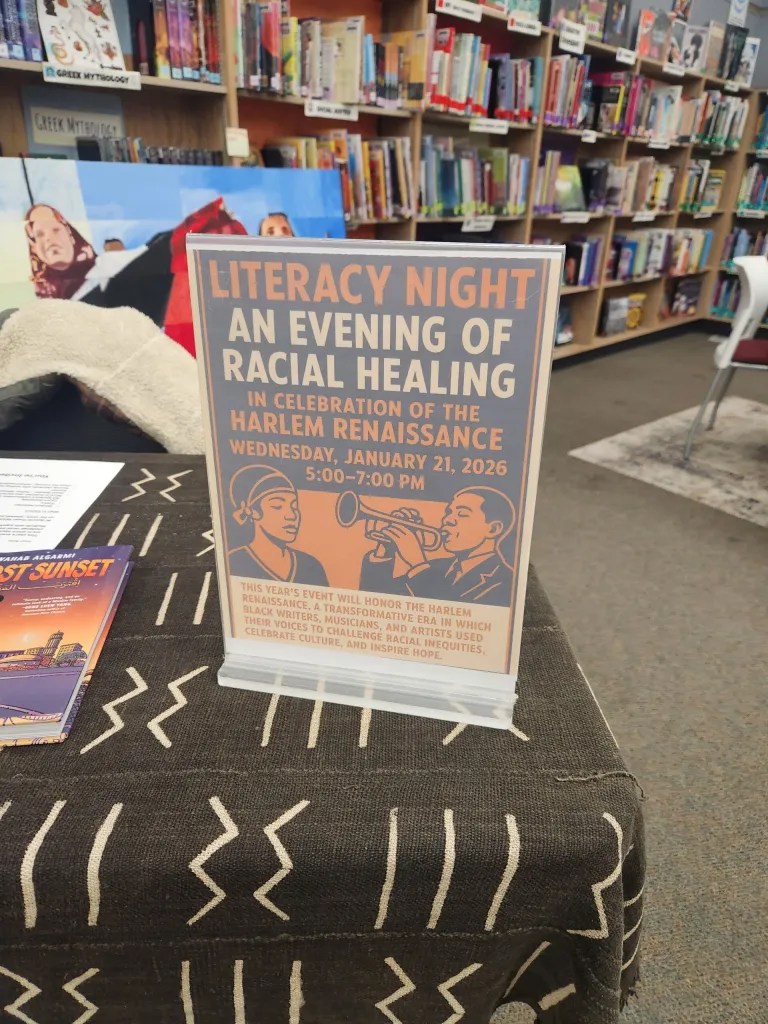
To bring literary history to life, one school organized a Harlem Renaissance night, drawing inspiration from the cultural flourishing of Harlem in the early 20th century. Students crafted original poems and stood proudly before their families, teachers and neighbors to perform them — turning a lesson into a shared community experience. “That’s a different type of connection,” Strowder said. “History is rich with experiences and stories that also affirm the lived experiences of young people today.”
In Oklahoma, one school librarian used guiding questions from the National Day of Racial Healing Conversation Guide to help students explore different themes through books and poems: “What stands out to you in this book, and why?” and “How does reading this story contribute to understanding or healing about race?”
“Libraries are a pillar of democracy,” said Allison Cline, interim executive director of the American Association of School Librarians, a division of ALA that focuses on the school library community. In a moment of heightened pressure on educators and public institutions, she added, “It felt really good…to celebrate this day.”
“Bringing people together to a physical space is one of the first steps,” Cline said. In the library, she added, shared space can become a bridge, a place where different cultures and communities encounter one another, sometimes in ways they hadn’t before.
“That was very healing”
For both NRPA and ALA, the National Day arrived at a moment when many public institutions are being asked to do more with less and still strive to remain anchors of connection and stability for their communities amid uncertainty.
“Our parks members and agencies are so diverse,” Saxon-Ross said. “They’re in big cities, metropolitan centers, small towns and rural areas, and they represent so many perspectives and people. Even in a year when resources are tight, what’s beautiful is that they could still rally around the idea of connection — and have the freedom to explore it in ways that felt relevant for their communities. That was very healing.”
For Strowder, the context made this year’s work feel just as essential in libraries.
“Libraries are often where communities turn when they need grounding,” he said. “Our members are in these neighborhoods. They know the challenges their neighbors are facing, and they care about these conversations. Engaging with community members in this way is necessary.”
What Is the National Day of Racial Healing?
The National Day of Racial Healing is a day created and observed by communities across the country as an invitation to come together, reflect honestly on the harms of racism and build relationships that strengthen belonging.
The W.K. Kellogg Foundation partners with communities and organizations nationwide to support and amplify this work each year.
To learn more about the National Day of Racial Healing or explore other resources, visit dayofracialhealing.org.